Why Your Multifamily Property Isn't Making Money
Some low-hanging fruit on why your multifamily property isn’t making any money!
Carter here. We founded Shekel Real Estate in 2026 with the goal and heart to help investors like you who are invested in real estate, but can’t seem to understand why your asset is not making money. We have sat down with countless investors and had many amazing and hard conversations. We have seen more multifamily properties than we can count fail, not because the asset is inherently bad — usually they are great properties — but because operationally they are falling short. Here are some tips and tricks that we have learned having operated over 550+ multifamily doors from distressed, to stabilized and smoothly running multifamily doors with great return and investment!
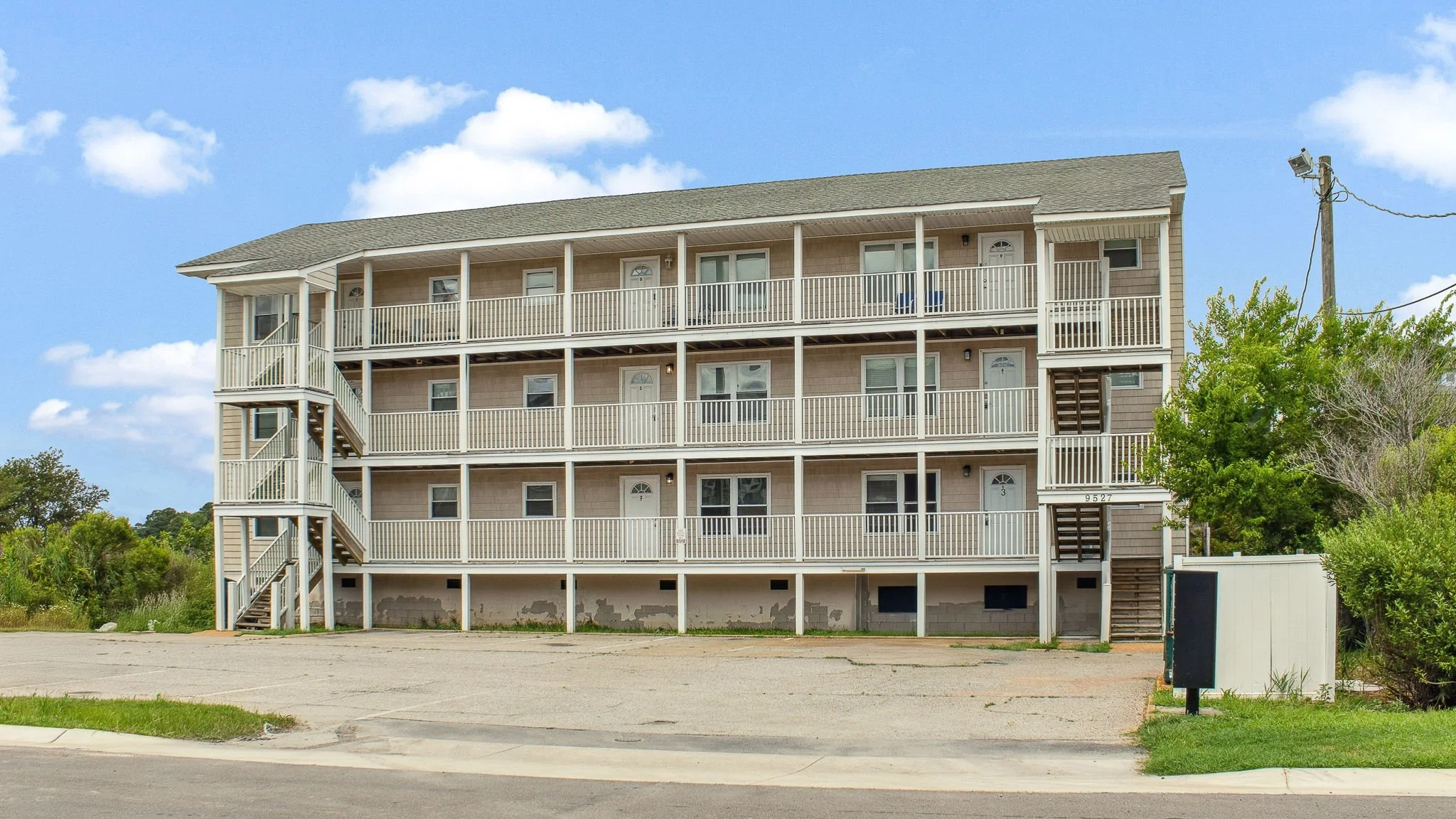
A property we renovated and stabilized in 2026 and added over $1 Million of asset value to.
1. You bought it wrong
With commercial real estate, when deals start to get thin, you start looking elsewhere in other markets. Sometimes it is wise to go outside your market and buy. But other times you do this and assume your local market rates apply to other markets. This is a big mistake. If you buy too high, you are over-leveraged from day one without much hope for rent growth, or even renovations to help your property. Buy like a local from locals.
Dangerous loan terms
I got to watch this happen firsthand, and am now seeing this come to its full fruition. In 2021 and 2022, many multifamily deals were purchased with five- and seven-year loans at historically low rates. Cap rates compressed alongside those rates, and business plans depended on rent growth continuing, renovations being completed on schedule and on budget, and rates still being favorable when it came time to refinance. The issue was rents began to stall out (if they did not buy with enough margin), capex reno schedules were delayed, and the interest rates no longer favorable. So when the time came to refinance, the terms outpaced the income. Even if, operationally, you killed it, financially it bit you in the butt. The interesting pattern I have seen, though, is most firms that are now in their balloon phase of their loans and needing to sell also did not run their properties to their best operational capacity, so it hurts even more. I will chat more about this in the next section, “You’re running it wrong”.
To prevent this from happening, we need the business plan and the loan terms to be married together. And we cannot buy assets at a faint promise of hope. It has to be a strong asset with a proven sub-market track record, or experienced operators who know fundamentally how to take the property to the next level.
As my grandma always tells me, “You make money when you buy real estate, not when you sell it”. They must be bought right.
Deferred capital work
If you forego much needed capital work, or ignore underlying capital work that is beyond cosmetic updates, you will find yourself in deep waters. This past year, we underwrote a deal and planned on $50,000 of HVAC repairs needed over a year as we turned the units. As we went through the renovation process, we ended up saving a good amount of money on interior renovations by things like replacing cabinet fronts instead of all the boxes, or keeping shower surrounds that were in good shape, etc. Because of that, when our 8th HVAC replacement came, and our HVAC budget was spent, we luckily had reserves from the saved cosmetic repairs.
If you take this pattern and expand it into a larger property, this could have been devastating. Up front, you need to underwrite all your major systems and capex expenditures expecting some hiccups and unexpected costs.
Not to mention, if these are ignored, maintenance costs from your property management team will go through the roof and your P&L won’t look too healthy.
2. You're running it wrong
Most of these items below seem straightforward, but based upon how many properties I have seen that don’t follow these basic principles, they seem to not be that straightforward. The main issue, I believe, underlying these oversights I think has to do with two factors:
1) Residential real estate agents expected to manage multifamily properties like an asset manager; and 2) Overworked Property managers with too many doors.
The first problem I encounter are real estate agents, with mostly good intentions, trying to manage multifamily as if it is residential real estate. This is a huge disconnect I have seen, and why building a sub-institutional property management firm that runs its shop like an institutional firm is low hanging fruit for a good business (albeit thankless one). I only know of a couple sub-institutional property management firms in Hampton Roads that I would actually trust managing my multifamily properties. If you think you fit that list, please reach out to me and let’s grab a coffee!
Secondarily, there are many property managers who are multifamily rockstars and experts, but they are overworked. This causes a lot of fatigue and oversight and therefore the following multifamily principles are missed.
Here are some other principles that I often see are fundamentally missed when running multifamily real estate:
A. Leasing and renewals
You have to be on top of your renewals and leasing. If I have a unit that is vacant for longer than 30 days after a turn or renovation, then something is wrong. Either the marketing, advertising, pricing, condition, or leasing is off.
If your property manager is not on top of regularly reviewing and renewing existing tenants with the new market rates, and leasing relatively quickly, your property will quickly spiral. Vacancy is one of your multifamily property’s worst nightmares.
B. Vacancy, turn time, and collections
Standard vacancy rates should not exceed 6-7%, unless there are outstanding property issues that are being addressed (large CAPEX renovations happening, shuffle in management, etc). This is one of the main things to keep your pulse on. Turns should be completed within a couple days if light and within a week-2 weeks if heavier. Collections should be less than 5%. Ironically, back when I was running a local PM firm with 500 doors, when we stopped offering payment plans, delinquency and collection went from regularly being around 6-10% all the way down to 1-4%. Unfortunately, with the new changes in the VRLTA, they are forcing payment plans onto landlords, which, in my opinion, is counterproductive to the issue they are trying to solve. As most complex problems usually are.
C. Rents below market
I have a spoiler alert for you: Most property managers try to go the route of least resistance. If you understand this point here, you will understand many things in the property management world. Because of this, they will often suggest lower market rate rents on renewals and leasing in order to cause a lease to be signed faster, and less pain in days on market. When you are monitoring your property, make sure you are pricing dynamically and adjusting and re-adjusting to the market.
On a sub 40-unit renovation and stabilization project we did this past year, we had leases signed from a range of $1,299 up to $1,425 over the course of a year on units that had the same level of renovation. We just had to dynamically price them according to the seasonal market. Winter kills your lease rates, and you have to price accordingly. But if you lease up your units at winter rates in the summer months, you are leaving money on the table.
D. Maintenance costs: in-house crews, managers taking the easiest route
Maintenance costs being high can come down to two main factors outside of the normal inflation factors:
Some property management companies are vertically integrated and have in-house maintenance companies. Maintenance is actually one of the biggest profit centers of a property management company. It makes sense. To truly manage a property well and only collect 8% of the rental revenue, so long as it is not a luxury or high end property, usually does not have great returns. With in-house maintenance, there is potential for a breach of fiduciary duty to the owner. To be clear, I am not knocking vertical integration – I actually prefer it. But the issue comes up when you have a maintenance concern, all you have to do is send your arm’s length coworker to solve the issue. But, when the bill comes, it is 125% what the other guy could handle it for. This obviously isn’t always the case, and most vertically integrated PMs are good actors.
Building relationships is extremely important with contractors as a property manager. But also managing pricing when you continue to use them is a must. It is worth checking in occasionally with pricing on maintenance costs and referring some new contractors to PMs. Prices can slowly tick up the more you have a repeat contractor so long as these prices aren’t ever fought.
E. Interpersonal Relationships.
Sometimes the best remedy to run a property well is actually simple: kindness. I have seen relationships with tenants go a long way in the property’s performance. Happy residents pay their rent on time, and are straightforward about any issues. Unhappy residents don’t care about the landlord or the property.
If you want to run your property like a rockstar, hire a rockstar property manager who loves people well.
3. You're seeing it wrong
The owner's own role: not reading the financials, no reporting, no accountability for the manager
More often than not, a big reason a multifamily property is not performing well is that the owner has their hands off the steering wheel. I don’t expect every owner to be in the weeds on their properties, but if you can't be, hire someone who can be (shameless plug, we can help you with that). A property manager is only going to perform as well as they are accountable for. If the owner of the property doesn’t seem to care, the property manager won’t care. I wouldn’t either if I was them!
Read the financials, review your P&Ls monthly, look into the details of your property. It will take you a long way.
Underutilized fees & Non-maintenance expenses: water bills, trash bills, internet
There are a a few fees or billbacks that I think could really help your property performance and multiply your value by increasing your NOI:
Trash Fees, Water Billback, Pest Fees, Utility Admin Fees, etc.
I am not necessarily for “fees”, because in many ways they can deter someone from renting. But there is a strategic way of approaching these. Double check with your lawyers before adding these to your leases as there have been a lot of legislative changes in the recent years in Virginia on these. I am not your lawyer, nor am I giving you any legal advice.
Water fees should be baked into your leases that tenants can be billed back on a RUBS based pro-rata share. So whatever the water bill comes in at, it is divided by the total amount of occupants, or square footage, and equally divided by unit. This usually works. The hurdles you often face are if there is a leak, and the water bill is high, your residents will be unhappy and you will have to go through the process of fixing, requesting a refund from the city, and delinquent water bills. You have to learn to navigate this situation like a pro and with good rapport. As well, you have to have a property manager who stays on top of this and bills immediately when they receive the bill. Late water bills that add up might as well be called bad debt and written off. Tenants don’t like paying late, jumbled up bills. Stay on top of it for your resident’s sake. And you can bill a utility admin fee monthly to incentive the manager that goes directly to them. This adds up.
Trash fees I have liked billing back to tenants as an equally dispersed fee that covers the entire bill, a $5 pest fee that covers routine maintenance and pest extermination helps a lot on an NOI side. Make sure you hire the right pest company, though.
Underutilized spaces
Do you have a common area that is large, and underutilized? Think of creative ways to repurpose it to add to tenant experience. There may be storage spaces you can rent out, or work spaces, vending machines, dog parks, etc. Think creatively with your tenants in mind on how to use spaces.
These are all ways to maximize your revenue on your apartment building, multifamily units, duplexes, or single family rentals. There are many more thoughts I have on this subject, but that is all for now!
I recognize that I have had the privilege of being able to learn and run multifamily real estate and learn from others’ mistakes. I have had a lot of risk-adjusted learning since my personal capital was never tied up into any of the multifamily properties I ran and renovations we completed. That being said, if you want to really understand the full picture of multifamily real estate, talk to your property managers, or manage your properties for a bit. The learning you gain from that will be invaluable to the success of your own investment properties.
Let us know what you think or if you have any feedback or questions! Surely this is not an exhaustive list nor article on multifamily operations. We would love to be someone who is in your corner and always giving you sound advice.
If you ever need any consulting work, help buying or selling real estate, or have a deal you want to look at, please give us a call or email! It is our joy to serve you and offer our expertise on any multifamily properties you may be interested in.
Blessings to you and your family,