
What is a Shekel?
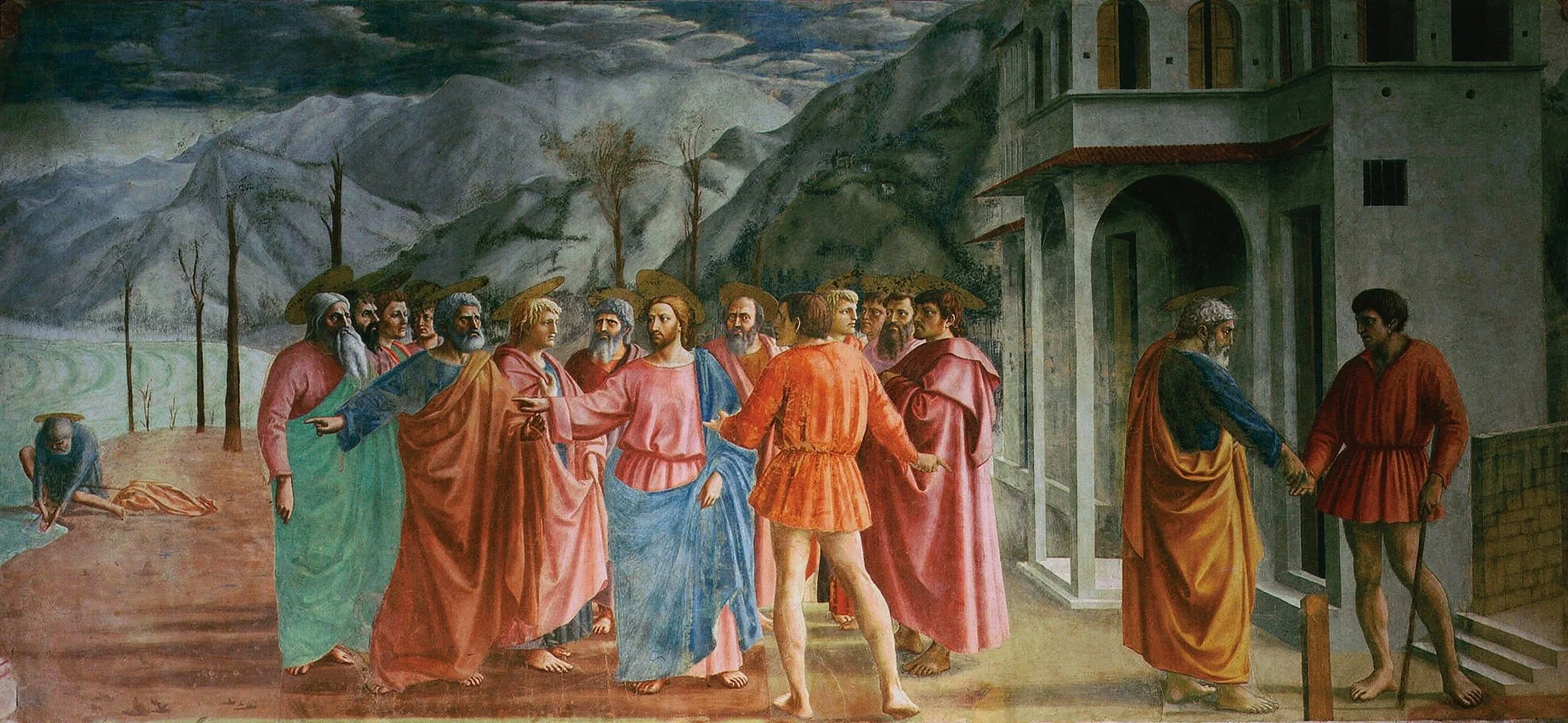
The Tribute Money by Masaccio
Some of you may be wondering what is a Shekel, anyways?
So here is the backstory of how the name came to me.
When I was growing up, I remember knowing two things about what I wanted to do when I was older: 1) I did NOT want to be a doctor, and 2) I did NOT want to be a businessman. For some reason, I remember thinking that I did not want to touch business with a 10-foot long pole. It seemed vain and lackluster. I wanted to travel the world, eating food, loving people, and maybe have a food show called Bizarre Foods (I think that name is taken). In middle school when my doctor asked me what I wanted to be when I grew up, I boldly said, “A philanthropist!”. He laughed at me.
I didn’t realize that to be a philanthropist you had to have some serious capital. I just thought it meant you wanted to love people (the word philanthrophy comes from the greek phílos + ánthrōpos, which literally means the love of humanity/humankind!).
I didn’t see many businesses actually loving people in a redemptive way. Of course, I didn’t have language of what it meant to love redemptively back then. But it was deep in me. And, as I am sure, there have been and are many people within businesses who are indeed doing just that. My bias began to change when I caught vision of people doing this very thing while taking social entrepreneurship classes at the University of Virginia. It was there where I first saw the practical and spiritual needs being met creatively through social entrepreneurship. That is what was burning in me.
After a couple of years working in ministry, I ended up making the hard decision to pursue entrepreneurship back in Virginia Beach. I didn’t have a plan other than I knew I couldn’t ignore the feeling inside of me anymore. I was the weird kid who felt like missionaries were some of the few people doing the work that needed to be done in the world. Yet, I felt like I was living in fear and wasting the vision God had given me, to deeply and practically meet the needs of others. After ending up in real estate through the Virginia Beach Fellows program, I slowly started to fall in love with it. It was a mixture of the things I liked: operations, market-knowledge, people-centered, and the ability to bless others.
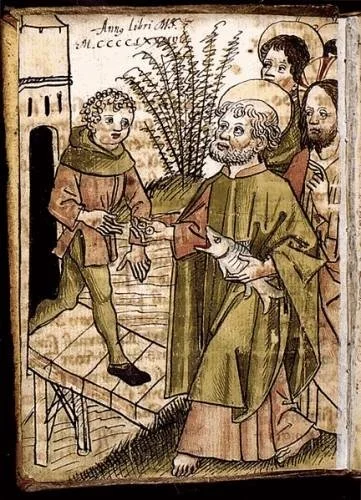
Facetiae Latinae et Germanicae by Augustin Tünger, published in Konstanz in 1486
So back to SHEKEL.
One of my favorite, and strangest, stories comes from the book of Matthew in the New Testament. Here is the story in its entirety:
24 When they came to Capernaum, the collectors of the two-drachma tax went up to Peter and said, “Does your teacher not pay the tax?” 25 He said, “Yes.” And when he came into the house, Jesus spoke to him first, saying,“What do you think, Simon? From whom do kings of the earth take toll or tax? From their sons or from others?” 26 And when he said, “From others,” Jesus said to him, “Then the sons are free. 27 However, not to give offense to them, go to the sea and cast a hook and take the first fish that comes up, and when you open its mouth you will find a shekel. Take that and give it to them for me and for yourself.” (Matthew 17:24-27)
There are a lot of very deep theological insights here that I will spare sharing here (ask me more in person). But a couple of things I want to highlight from this story that resonated and spoke to me in a season of deep wrestling:
The Sons are Free
I was in a season where I was wrestling (and still do) a lot with work and what it means. Having a deep background in theology, I was really questioning a lot of the utility and function of how we work. Why do we all just graduate (or skip graduation) and fall into this 9-5 work “trap”? Why do our lives shift from centering around school, family, and play to centering on work? Why do I see - over and over again - people lose the flame of life and joy that used to pervade them? I was worrying, and still do sometimes, about what it means to toil and work to earn a living. Will I ever escape this vanity of working for money to pay for living over and over again? The words came to me. “Carter, why are you laboring as if you were not a son? The sons are free.” This hit me like a joyful ton of bricks one Sunday afternoon. I think I began jumping around in joy in my little condo. Embarrassing. The deep desires in me to find a family-shaped job, and a place where I could move at the pace I sensed I was called to. The deep desires to try as much as I could to escape a system that is built to serve money and not God or others. A system that sometimes robs us of our own dignity and humanity. I didn’t have to live by its rules anymore. There was a Creator who had Greater rules than these. The sons are free. I have the freedom to do what I have been sensing in me, albeit imperfectly. I don’t have to labor as if I am something other than a son. I am free. And I can pursue this freedom courageously, trusting a Good God will provide for me and my wife.
Providence in Work & Life
Then comes the providence and freedom. It may seem unwise or impractical. When someone asked me what my “business plan” is to grow, I laughed. “I don’t have one”, I said like a fool. My business plan is to trust God (and work hard and steward what I have been given). But I hunger for a deeper reality, and deeper living. I am trying to not let my heart and soul be purchased by the world’s demands to produce and make profit. Though, producing and making a profit is nice in its time, it can’t be at the expense of others. I am sure I will have to continue to choose others over return over and over again. When we live in these realities of the Kingdom of God, I felt a deep conviction that God would and will provide. If He can cause a Shekel to be produced from the mouth of a fish, surely he can help me pay for my mortgage, provide relationships, partnerships, and deals that provide for others and my family as well. Not only that — he will redefine in me, and in the community I live and work, what it truly means to thrive and flourish. We can trustfully move in a way that truly benefits others, our cities, and that answers that deep call in us to love others above ourselves. We can slowly, but surely, begin to shape our towns to become places where beauty is valued over profit, where truth AND goodness meet together, and where our far more deeper needs are met - to exist in union with God and with each other. We can be that change, if we so believe it, and have the vision to execute it. Go to the sea and cast a hook and take the first fish that comes up, and when you open its mouth you will find a shekel.
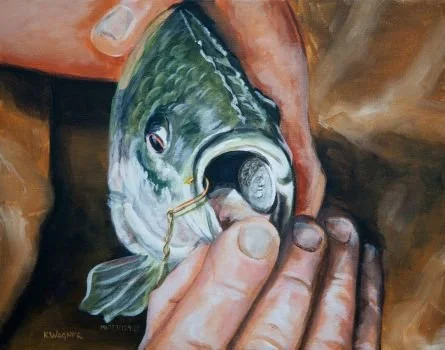
Lest We Offend by Karl Wagner

Shekel Logo, Design by Sam Kittrell & Carter Fleck